 Разработка ПО
 Менеджмент
 Для компаний
 Для стартапов
 Архитектура ПО
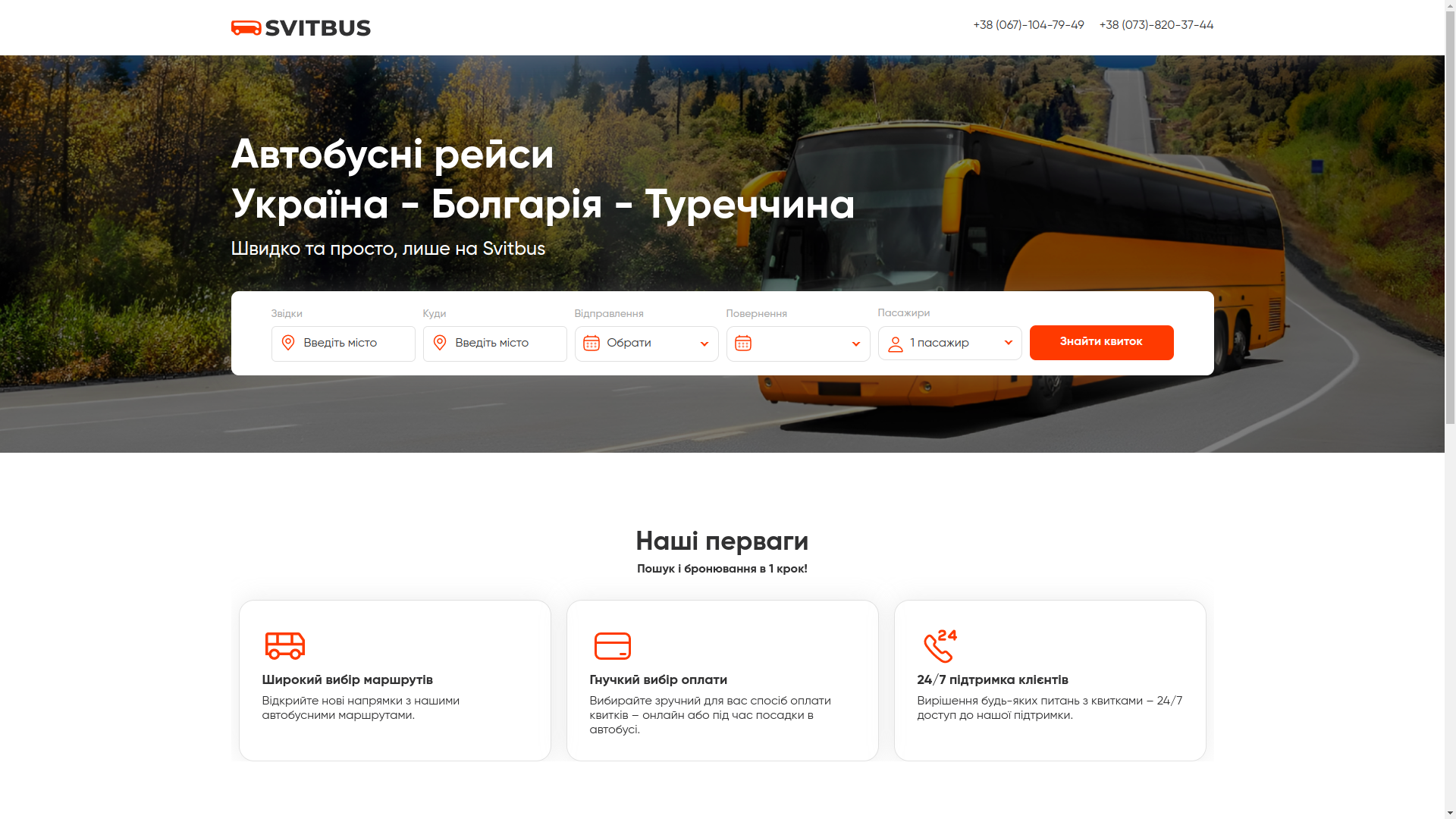
Do you want to develop an application similar to BlaBlaCar or Busfor or FlixBus, delegate operations, and scale? But these are experienced market leaders who spent hundreds of thousands of dollars on development... There is a way out! And today we will talk about our approach to developing services and corporate systems in the transportation sector, which will allow you to create the first version dozens of times cheaper and at the same time in some aspects even better than well-known major players. We will also talk about some pitfalls, mistakes, and difficulties that we recorded and analyzed so as not to repeat them in other projects. Svitbus is an application and accounting system for bus ticket booking designed and developed by Ingello Systems, with route selection algorithms based on European standards. Several algorithms that this application has are still absent even from the largest above-mentioned competitors — check it yourself! In particular, the smart algorithm for optimizing route logistics at intermediate points.
Оглавление
- Solutions
- How we manage to do this
- Everything comes down to quality
- Unique algorithms and their features
- Return trips
- Smart segment search with temporary bookings taken into account
- Refunds
- Discount system
- Project mistakes
- Challenges, problems, conclusions.
- Materials
- Technologies
- We can do much better
- Advanced features that we want to develop for you:
- Why you need to order right now
- What is the difference
- How is this better than ready-made software
- How we differ from competitors
- How your own application is better than a simple website
- ATTENTION! The article is in the process of being written and approved. Typos are possible. Thank you for your understanding!
Link:
https://svitbus.com.ua/
Link to the website that is built on the engine we developed (colors and minor details changed):
https://bus-prestige.com.ua/
You can also view the description of another project that we designed and developed (the design is not ours)
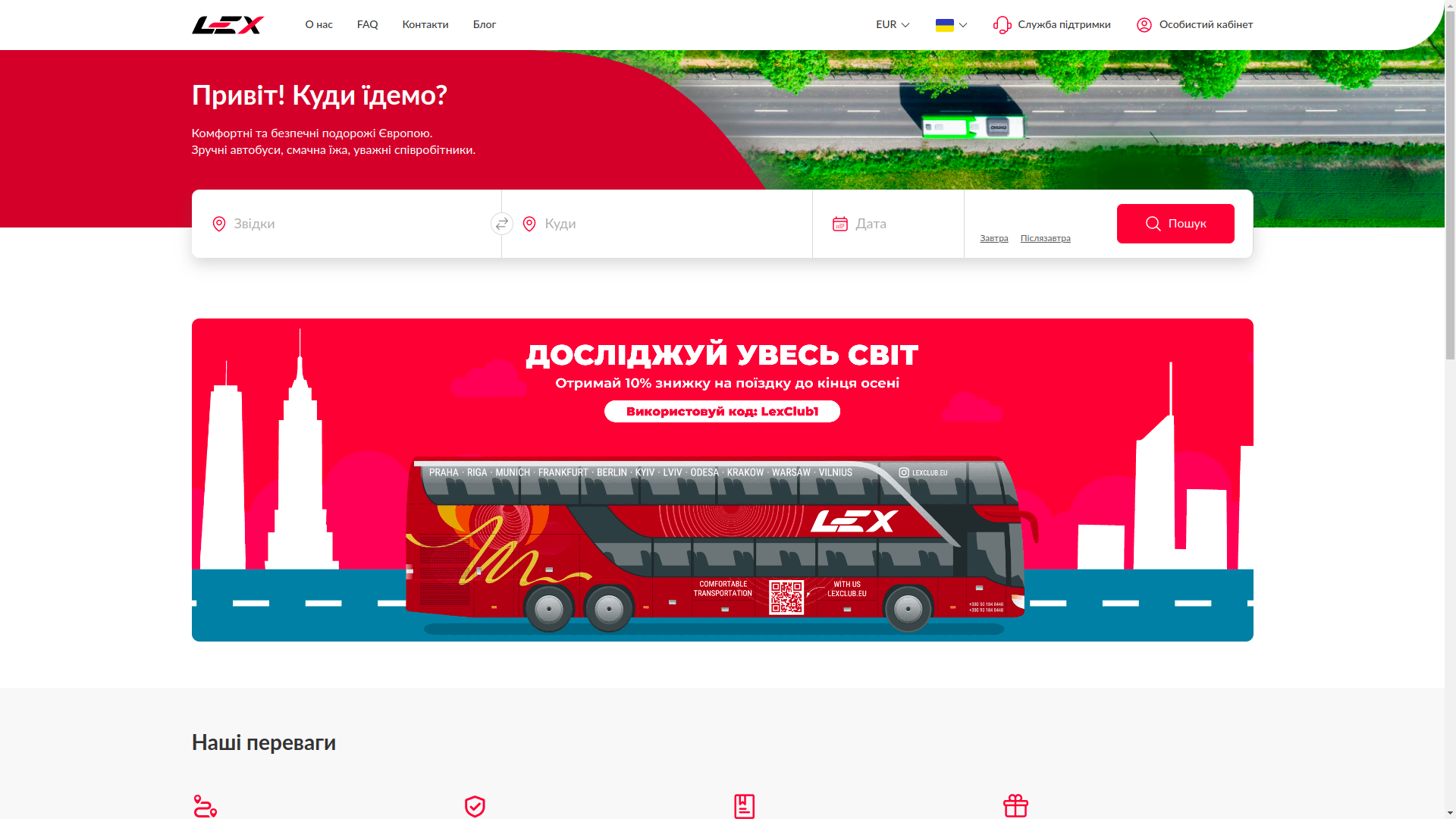
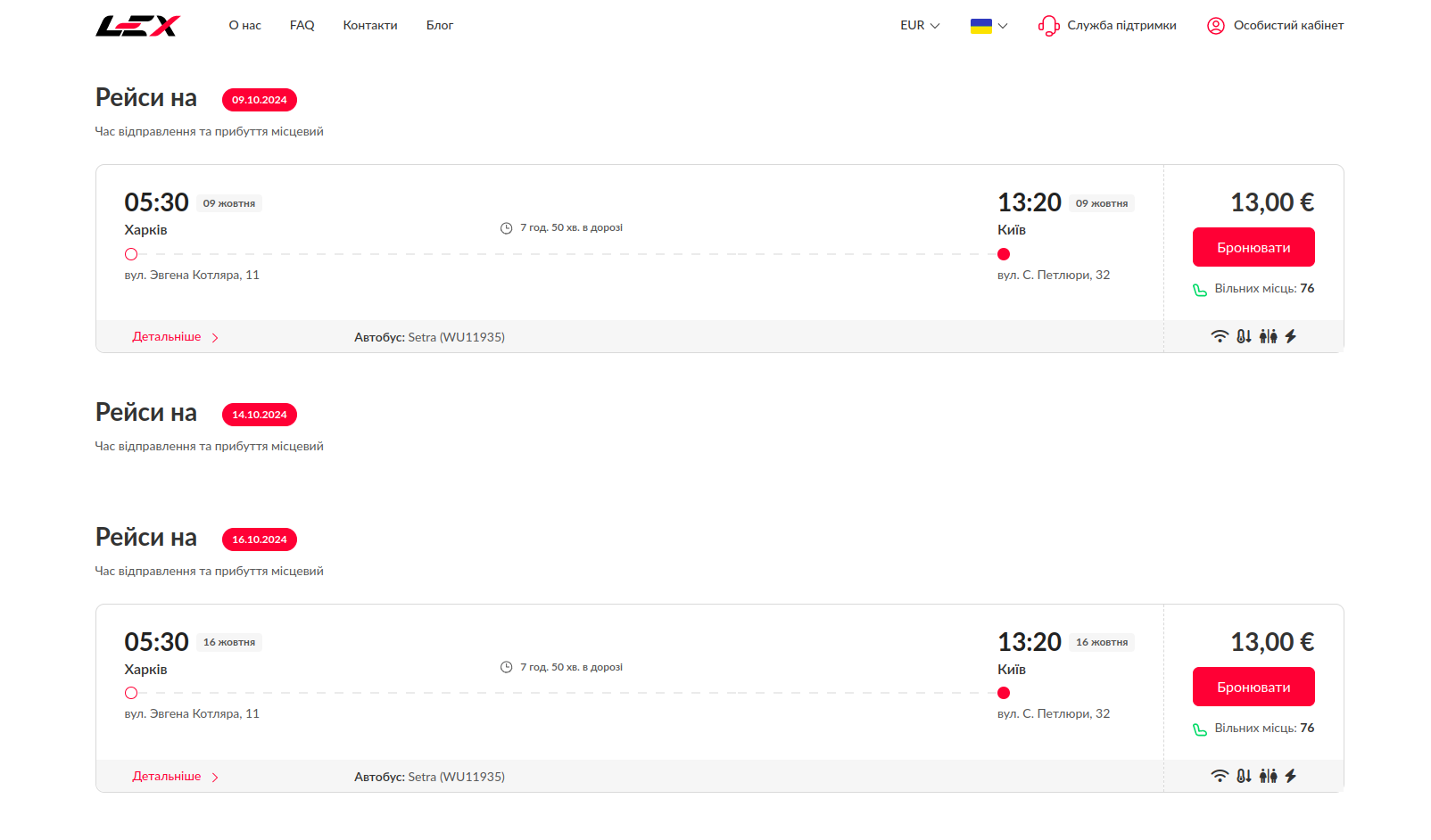
- https://business.ingello.com/lex
- https://lexclub.eu
- *Important! There are a number of topics that cannot be discussed for this project due to non-disclosure agreements, so, of course, the material cannot cover the full depth and specifics of the project. In addition, every project, even in the same field, is unique, so contact us for professional help — preferably as early as possible, even at the planning stage or just the idea stage!
Solutions
For your client and sales
- Route search algorithms with temporary reservation taken into account
- Route on the map - path segments (generated automatically)
- Convenient online payment in 1 click (bank, Google, Apple, and more)
- Stops and compact filling of free route segments with drop-offs taken into account
- Discounting (personal, by categories, promo codes)
- Seat selection on the bus - visual and clear
- Ticket options - baggage, additional amenities for an extra fee
- Temporary reservation with a timer
- Order placement, number verification, booking
- Tickets, printing, QR verification
- Return trips (duplicate of the outbound trip)
- SEO Generation of articles and landing pages for SEO
- Reviews for destinations
- Accounts, history, download ticket
- Registration, verification, anti-bot
For your company and scaling
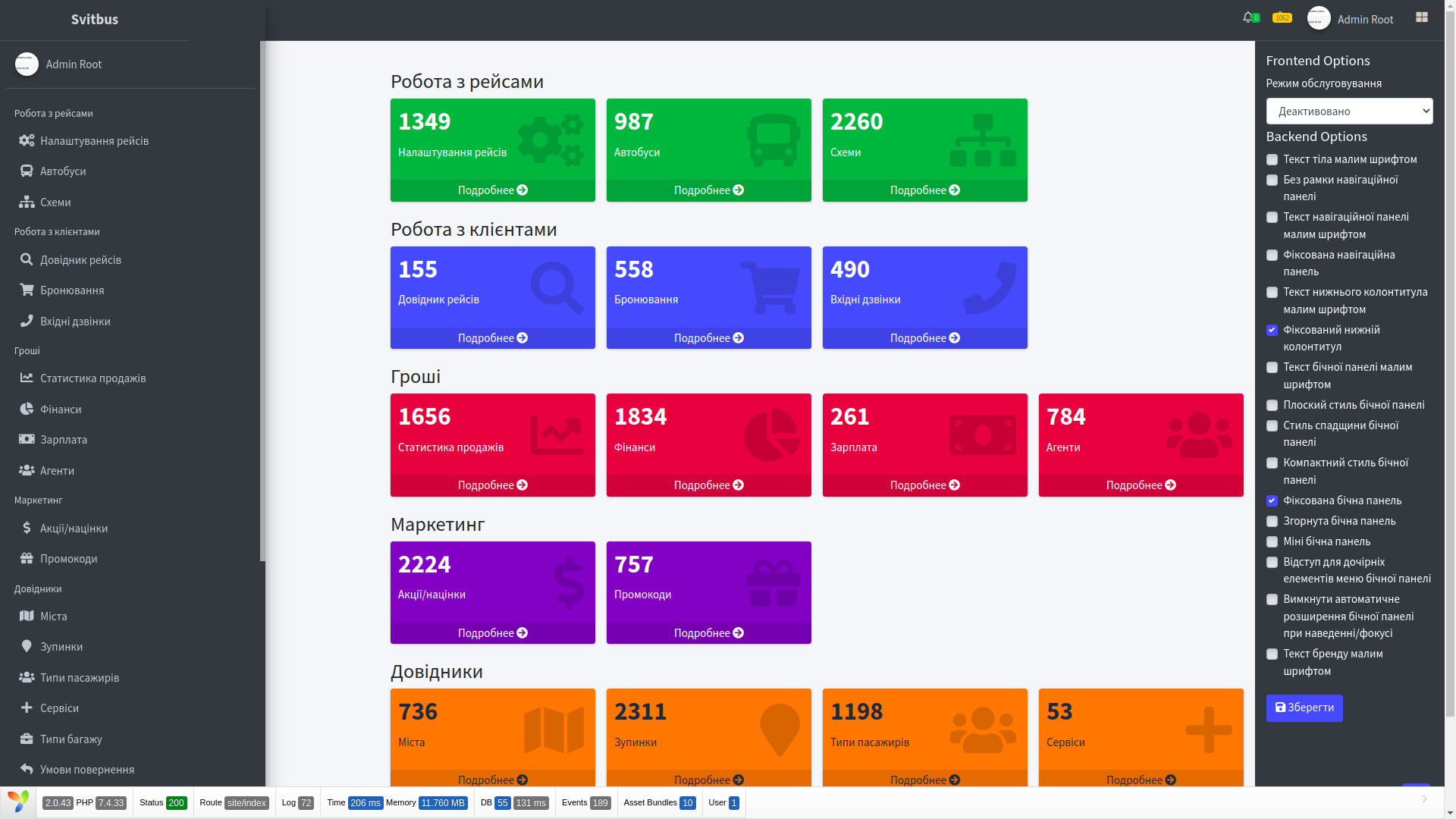
- Corporate secure multi-user system
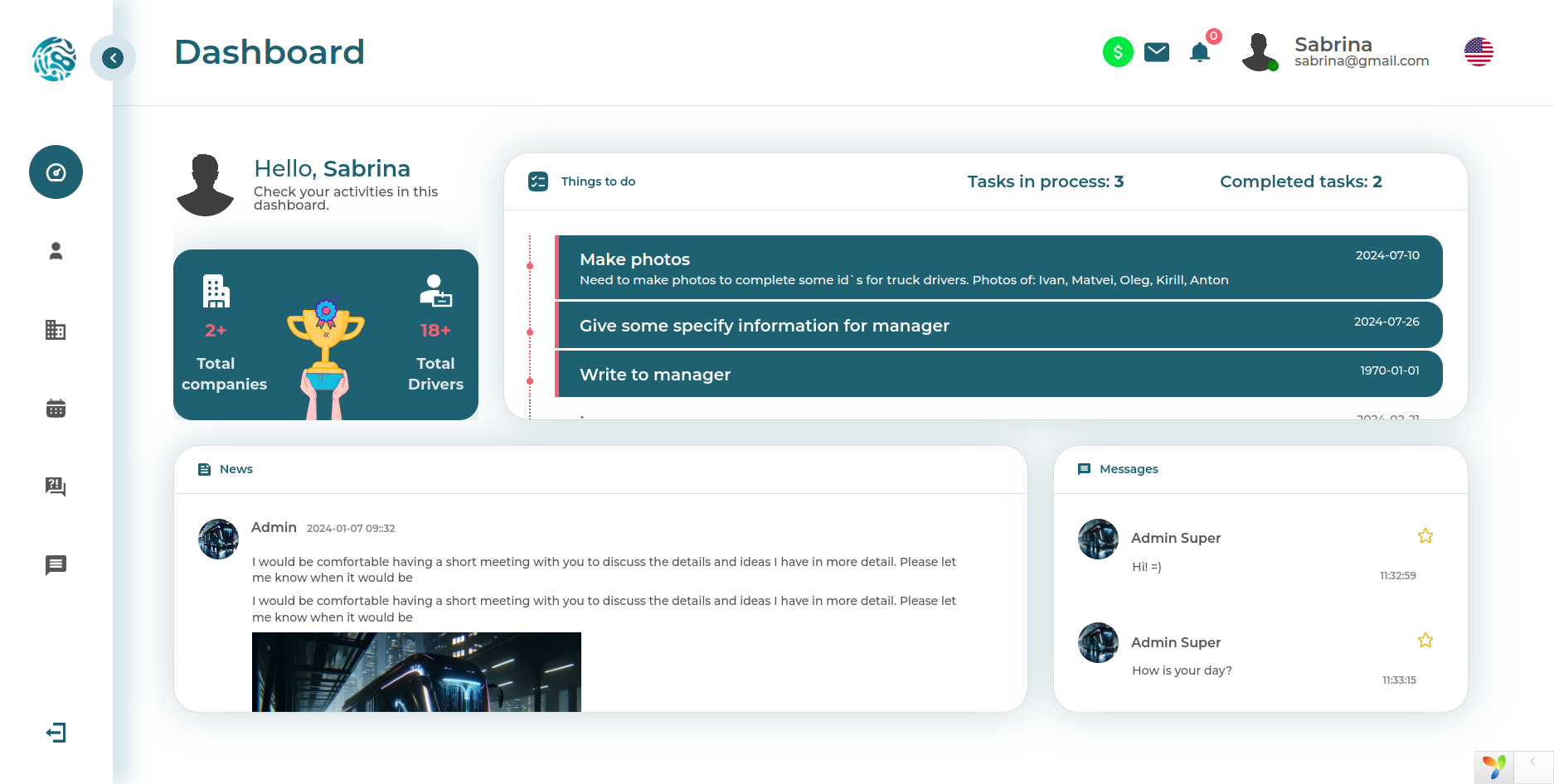
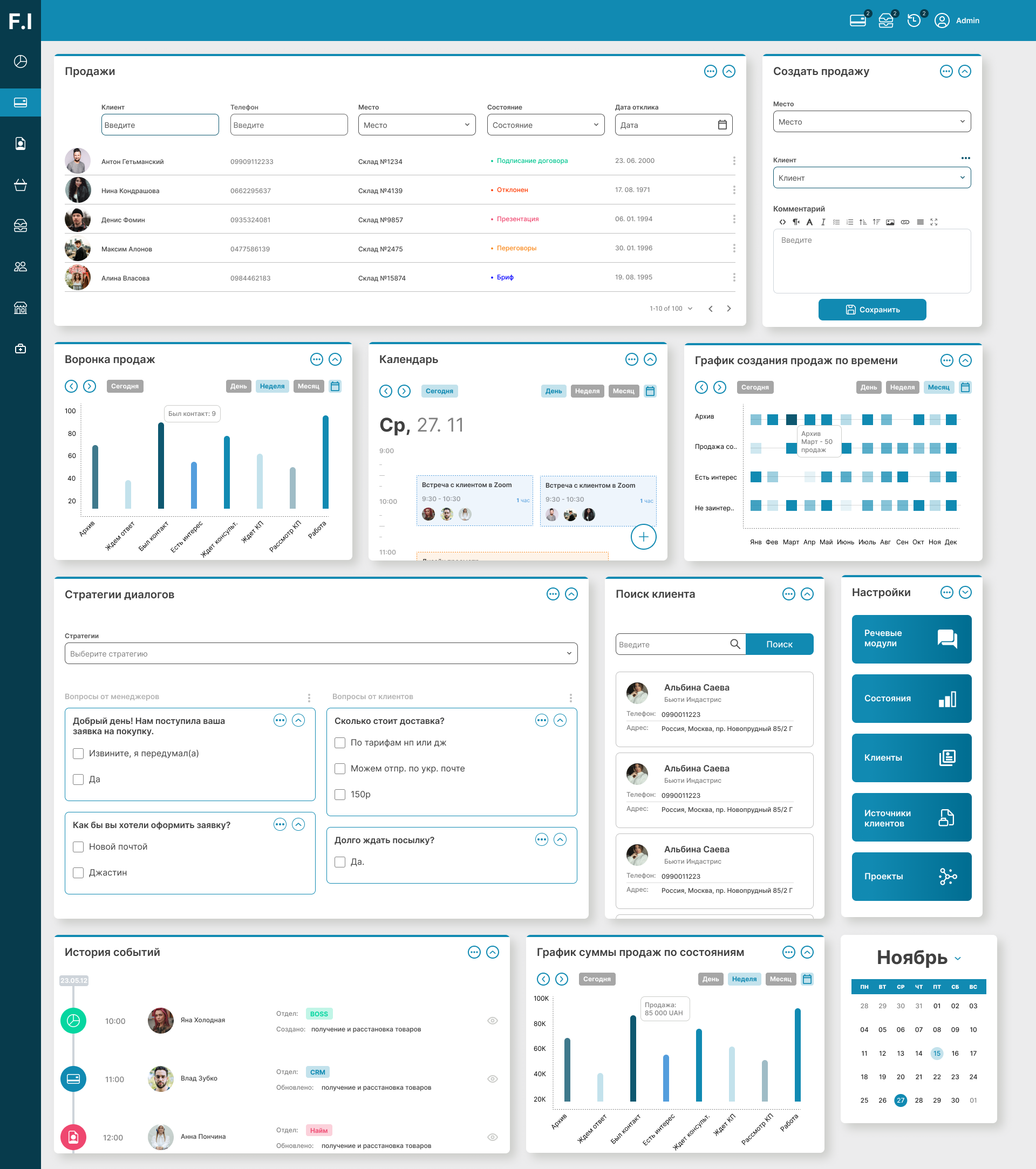
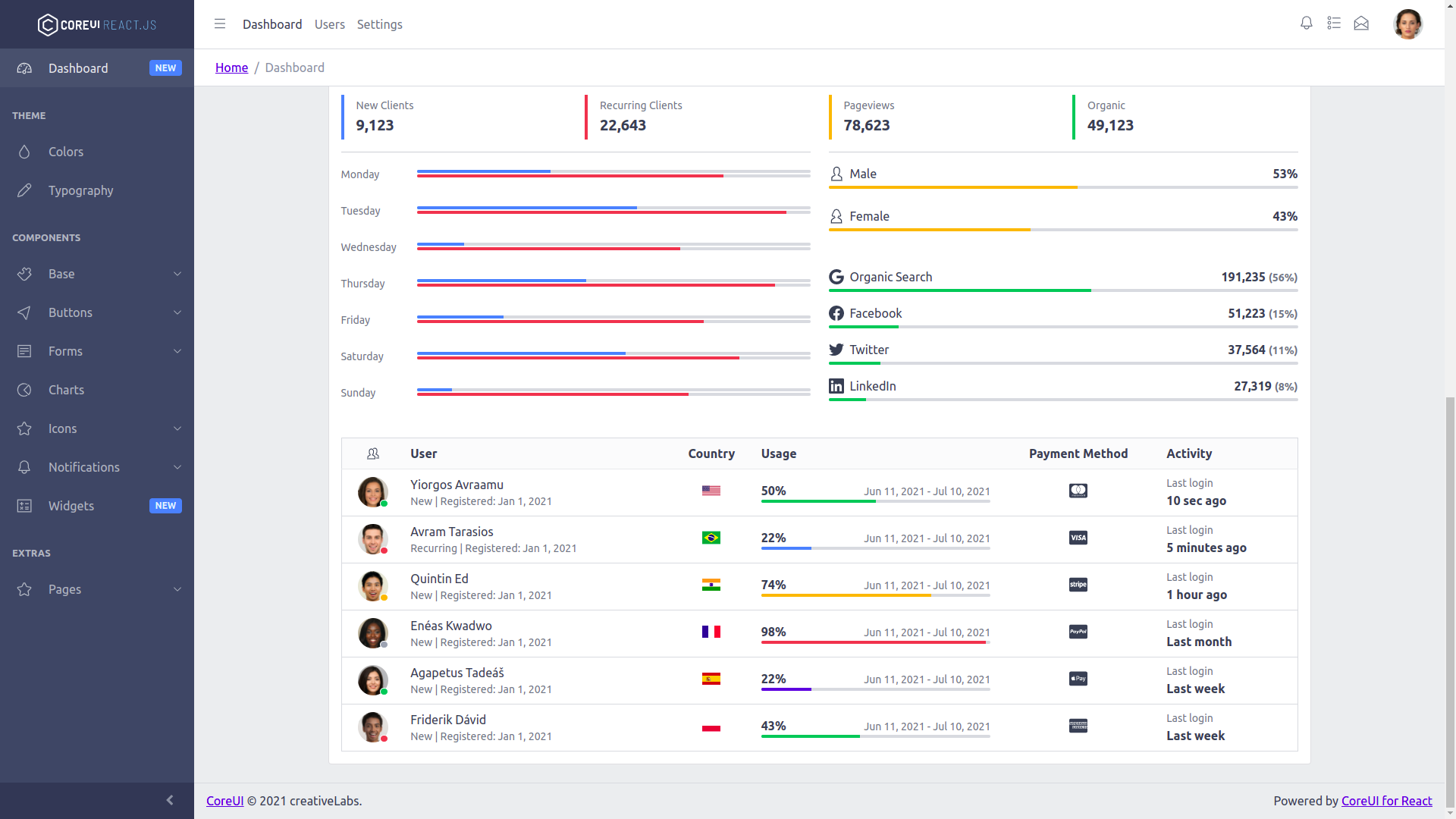
- Owner dashboard - all figures and the pulse of the company
- Bookings panel and booking history with search and filters by parameters
- Partner carrier panel
- Manager panel
- Operator panel
- Driver panel (route, ticket verification)
- Builder for any types of buses and amenities
- Builder for trips, stops, transfers
- Discount builder
- Options builder (amenities, luggage, …)
- Automatic generation by departures with intervals
- Price calculation by segments and stops
- Automatic and advanced pricing
- Calculation of employee salaries, payouts
- Finance, income, expenses
- Sales statistics by destination
- Telephony (recording call reception, call information, call text)
- Tracking client behavior on the website (clicks, mouse movements)
- Trip directory, cities, stops, amenities builder
For whom and why
If you understand that without this it is impossible to scale and reach a worthy capitalization - skip this part to save time.
A modern transport company striving for high profitability and scalability cannot function effectively without implementing automated management systems. Such systems make it possible to go beyond operational routine, freeing managers from constant control and participation in everyday processes. Without them, the business remains dependent on manual labor and direct management, which limits its growth and value in the market.
Process automation, from route management and dynamic pricing to predictive bus maintenance and passenger flow data analysis, makes it possible to reduce costs, increase efficiency, and improve service quality. This, in turn, attracts more clients and makes the business more profitable.
Moreover, such systems enable task delegation — for example, managing partners, operators, and employees through integrated panels. This allows founders and owners to focus on strategic development and company growth, leaving routine tasks to the automated system and staff who work through transparent and efficient processes.
Without this automation, the company will not be able to reach the level where the business becomes an independent asset — valuable not only as a current source of income, but also as an attractive object for investors and buyers. We have talked about the obvious, now let us talk about how not to spend all the money in the world and all your nerve cells trying to create such a system for yourself.
How we manage to do this
So, we have a task before us. To create a system that, in an ideal world, would require about 500,000 dollars and several years. But without half-million investments. And in several months. Most companies would simply throw up their hands and say "this is impossible". However, we have a number of development automation solutions, for example Fractal Ingello, known in narrow circles. Roughly speaking, it is an AI robot programmer (but it is not omnipotent!). And this makes it possible to save on some stages (especially early ones) without major damage to quality, and sometimes even to create a level of quality that teams cannot provide when developing an application from scratch. About this technology of ours there is a separate article.
In addition, there were some existing developments and experience that could be reused: this was far from our first project in a field related to search algorithms and booking - there were many projects in real estate rental, job search, hotel booking, service station search, logistics - there are many similar subsystems there...
And in the field of booking tickets specifically for scheduled buses, by 2023 this was already not the first and not the second project, we knew this subject area. Of course there were no illusions that this could be done for a few thousand dollars and launched - that was not even discussed. However, there was also no budget of several hundred thousand dollars to create an uncompromisingly powerful system based on the latest standards and technologies, so a number of difficult compromise decisions had to be made both at the level of business analysis and requirements definition, and at the system level of building the solution architecture for this application.
Everything comes down to quality
Let us not drag out the intrigue - creating a REAL copy of BlaBlaCar or Busfor without hundreds of thousands of dollars for development is impossible, if taken in the direct and literal sense. It is a huge system, under its hood are extremely complex mechanics, a complex architecture that can be created and maintained only by a large and experienced (read: expensive) team. But the requirements of BlaBlaCar are not at all the same as those needed by a startup at the MVP stage or by a company that has a simple website with bus/trip search. Big players need to withstand enormous loads, ensure fault tolerance, flexible scalability, integrate with many services, comply with tons of security regulations, maintain detailed documentation, conduct large-scale big data analytics, provide multifaceted monitoring of subsystems, and at the same time be able to make changes, test new hypotheses... But they did not immediately become so large and demanding.
Of course, all this is not at all mandatory for a startup; one must come to all this gradually, a startup is much more tolerant of many risks and can afford to comply with far fewer standards. However, there are some sets of requirements where saving money is not beneficial. For each project they are its own and are selected individually when building the architecture. But there are also common ones. If you start development based on a ready-made solution, such as Wordpress, OpenCart, Joomla, or more specific niche solutions, it will not be possible to change this later, and the project will very quickly run into the limit of possibilities in terms of the number of functions and integrations. At a certain point, in 99% of cases, the solution will need to be completely rewritten.
You also cannot save on system flexibility parameters. If we immediately write the system in a budget version and save on refactoring procedures, we risk bringing the application to a state where the development of each new function will be many times more expensive and longer in cost price than at the development stage.
Scalability parameters also cannot be ignored - who needs a system that will not be able to withstand peak loads when launching an advertising campaign at the moment when it is needed or when a good marketing opportunity appears.
Unique algorithms and their features
The project included a number of solutions that even large European companies have still not implemented. Among those we can name are the Return Trip Mechanism (not available on Busfor) and Optimal Bus Filling with segment consideration (not available on Infobus, Eurolines, FlixBus).
Here ChatGPT analyzes popular resources whose search and booking algorithms are inferior to ours
https://chatgpt.com/c/4f28fc55-3888-4bdb-ae0c-a0648c72a335
Return trips
The first mechanism allows booking trips both one way and return. And without going into deep technical details, this function unexpectedly greatly complicated absolutely all algorithms for trip selection, seat booking, and even passenger data entry and payment. It becomes clear why even market leaders have not implemented such algorithms - it is difficult.
Smart segment search with temporary bookings taken into account
The second mechanism allows not just assigning people to trips, but also performing searches for trip segments where a person has bought a ticket, but not for the entire trip, only for intermediate points. We were very surprised when testing the applications of market leaders and, during booking, discovered that they had not yet implemented this algorithm, while we had already developed it. Like return trip search, this algorithm affects absolutely the entire business process. Instead of simply searching for trips with matches by internal drop-off points, we had to write a huge hierarchical algorithm and a series of structural queries that made it possible to produce a complex selection from almost a dozen intersecting relational sets - and all this with complex groupings and under limited performance conditions (excuse the profanity). Designing such an algorithm is a non-trivial task in itself, but in addition it must be written in such a way that it meets the promised quality and data loading speed, so that the system does not spend 3 hours loading each trip.
Refunds
There were also a number of other interesting solutions. As in almost any project, the refund system is always underestimated and looms in the background, although refund logic can often be more complex than some more front-facing functions. It always seems that order cancellation is just some alternative scenario that will somehow integrate itself into the system; everyone wants to think about the system's popular and obvious functions. However, already at the data collection and technical specification development stage, our business analyst identified complexities in this subsystem and thought through the logic of this business process, which was agreed with the client far from the first time. The development stage according to these requirements also required some ingenuity.
Discount system
The discount system is another example that is often underestimated and not discussed in a hurry. But discounts are always a "dark horse" in the pricing system. It would not be a mistake to say that this is its most complex part, containing a large number of degrees of freedom and non-obvious mathematics. For example, in this project there are different categories of discounts - you can choose a discount for a specific passenger, there may be a discount for the entire client, a promo code may be entered, and of course problems arise when all of this is selected simultaneously. We will not dwell on the complexities of displaying price changes to the client in real time during order placement - nothing special. But there are features in the mathematics. For example, have you ever wondered whether there is a difference in the sequence in which a discount is applied to the original price? Is there a difference between applying the promo code immediately to the entire price, or at the end - after personal discounts? Is the promo code application distributed separately to each seat, or on top of the final cost at the end? There is a difference, and it can noticeably change the final amount. The sum does not change when the addends are rearranged - this is not about this case! And there are variations of the algorithm that are more beneficial to the company, and there are variations that are more beneficial to the passenger. There are also variations that are simply erroneous; there are many moments here where an incorrect algorithm can be written, for which the client will then bear responsibility under current legislation. In general, discounts are an important matter.
Project mistakes
Of course, we do not have the right to talk about all the mistakes, but there are some general observations specific to any similar project, and in some cases to any technology startup in general. Any project contains mistakes, and even with more than 13 years of experience, in absolutely every project we record and analyze these mistakes, so each next project is much better than the previous one, but perfection is unattainable.
Large volume of work in a short time
Large volume of bonuses in favor of the client
Challenges, problems, conclusions.
Goal - to create a 500k-dollar project, but with a radically smaller budget.
Payment systems - the paradox of an unfinished project (it is not finished, so payment providers do not want to connect us, but how will we finish it without payment providers?)
Hundreds of bugs: the reason - simplified architecture and a startup mini-budget, ripple effect.
Testing paralysis, repeated testing.
Mistake: splitting the booking algorithm into iterations (it should have been done in one go). Return trips, stops, and adjustment for purchased tickets required substantially reworking the algorithm at our own expense.
Development from a ready-made template - an economical, but difficult-to-approve solution.
Materials
Project design in Figma (after our audit and before our implementation at the hypertext markup level). Many people think that design requires a designer. This is a popular misconception. A designer is not an architect and not a programmer. A designer can draw a modern interface for you according to UI rules, or maybe even UX - if it is a highly qualified and experienced designer, but they will not tell you (and you will not ask) about the cost and appropriateness of such a solution at the implementation stage, about layout specifics, and will not analyze how relevant a particular function is for you, so at the design stage an architect and a business analyst must participate in order to make a truly high-quality project design decision.
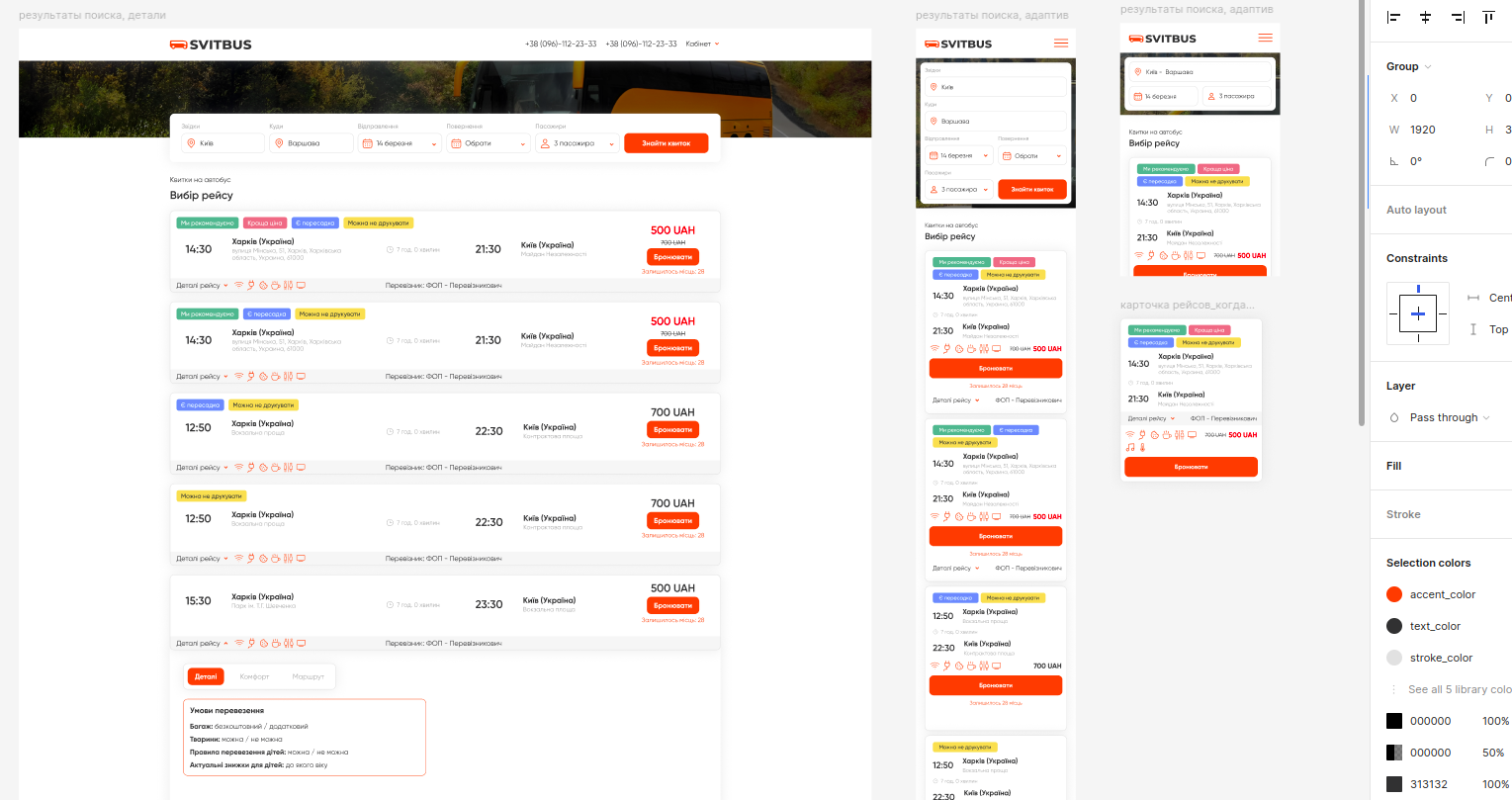
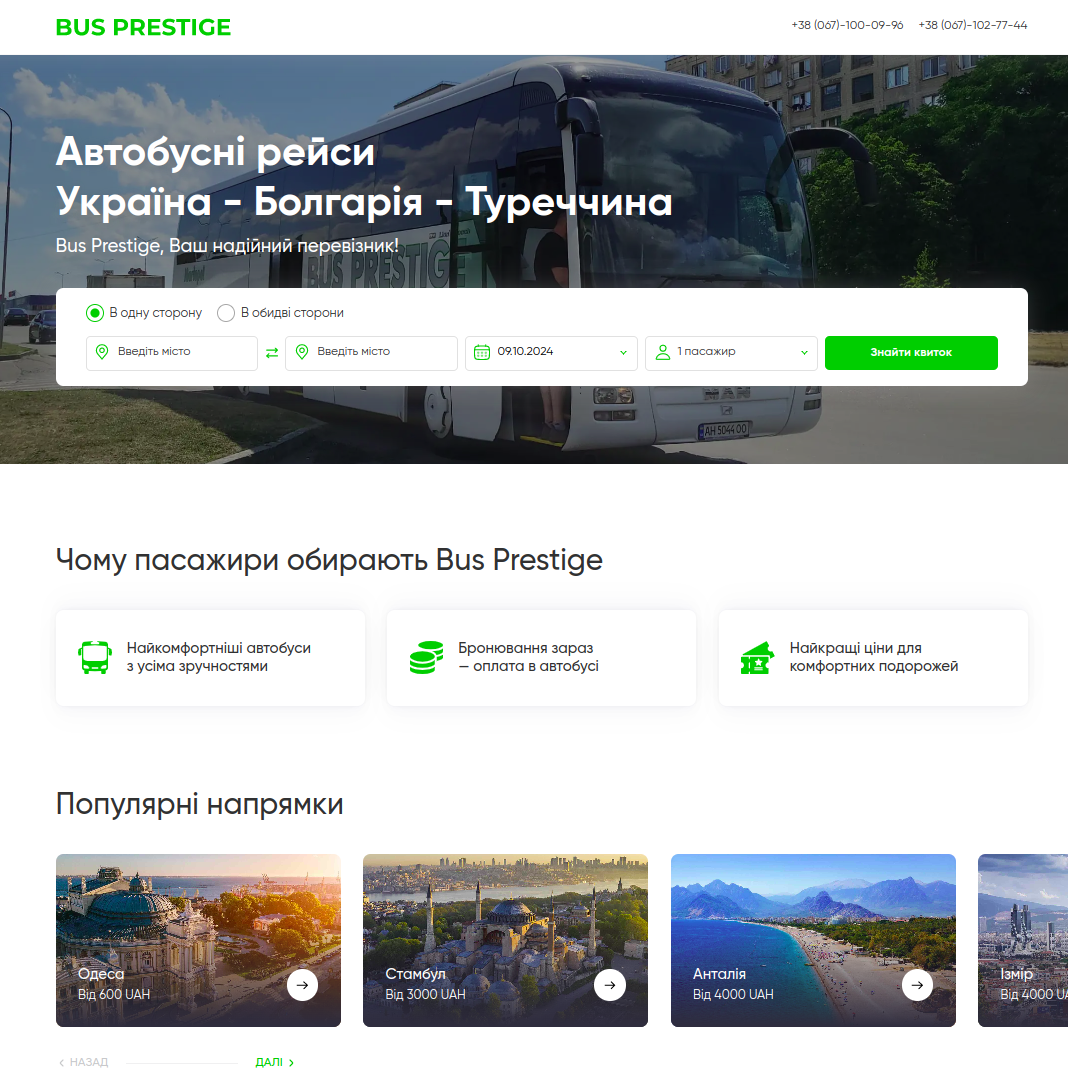
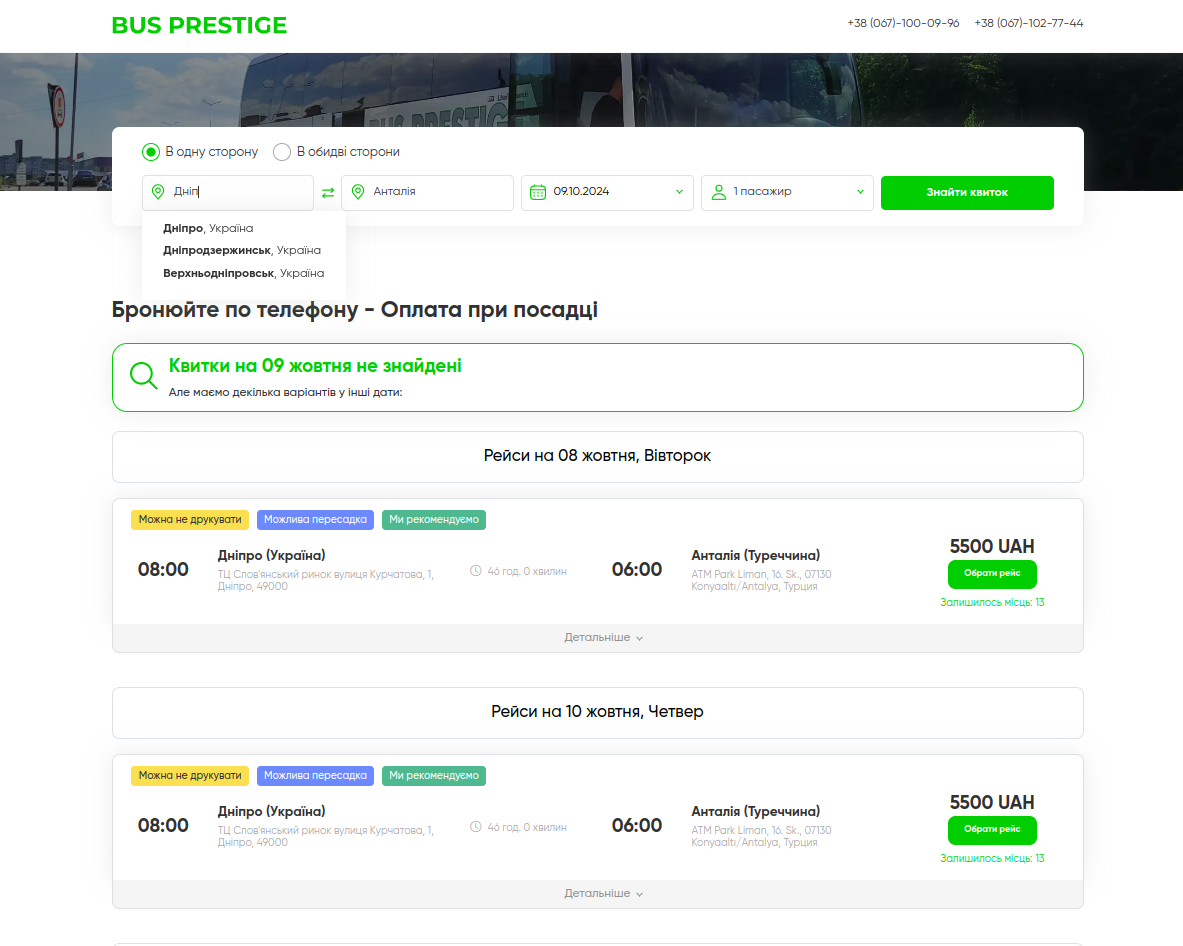
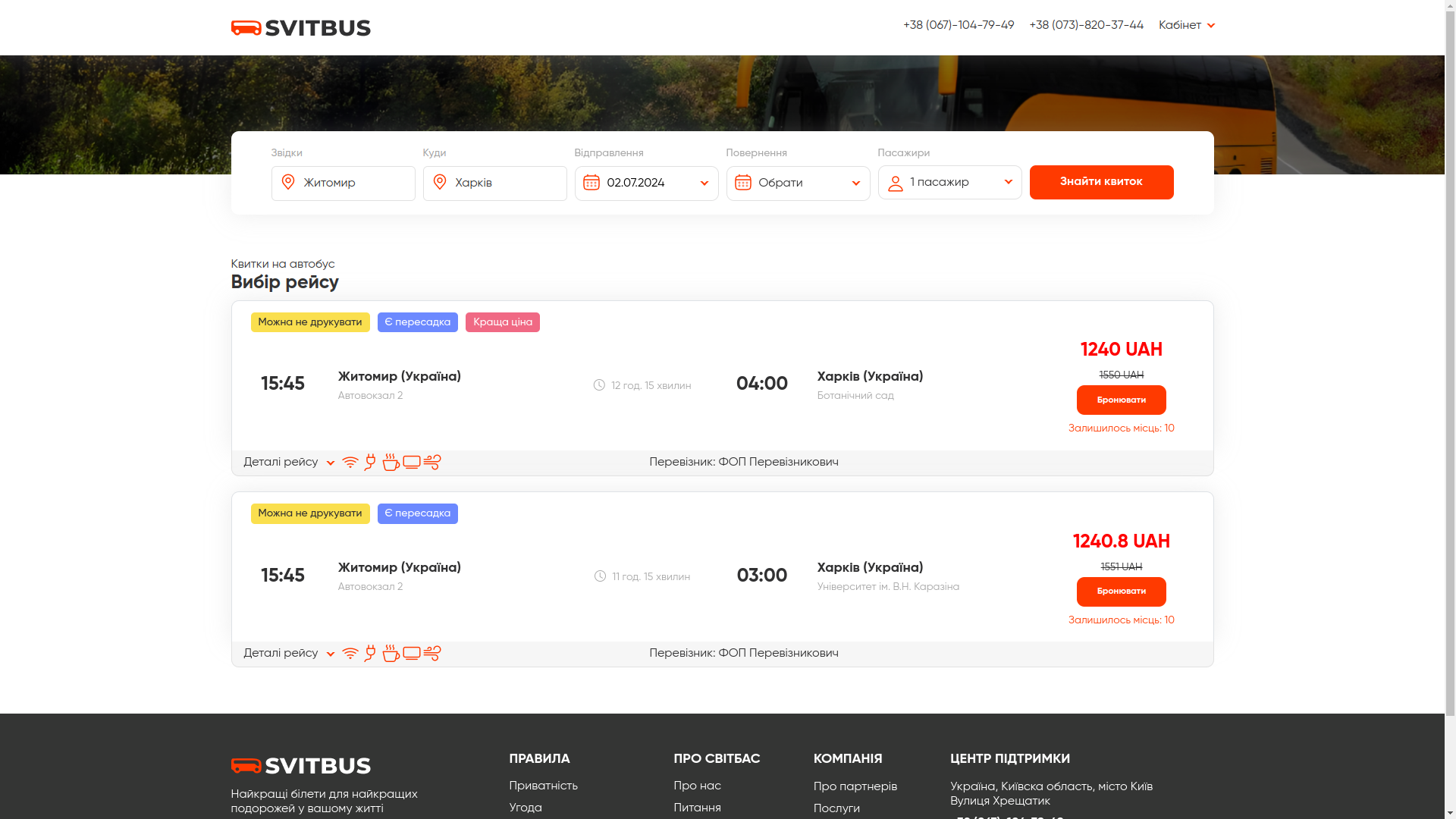
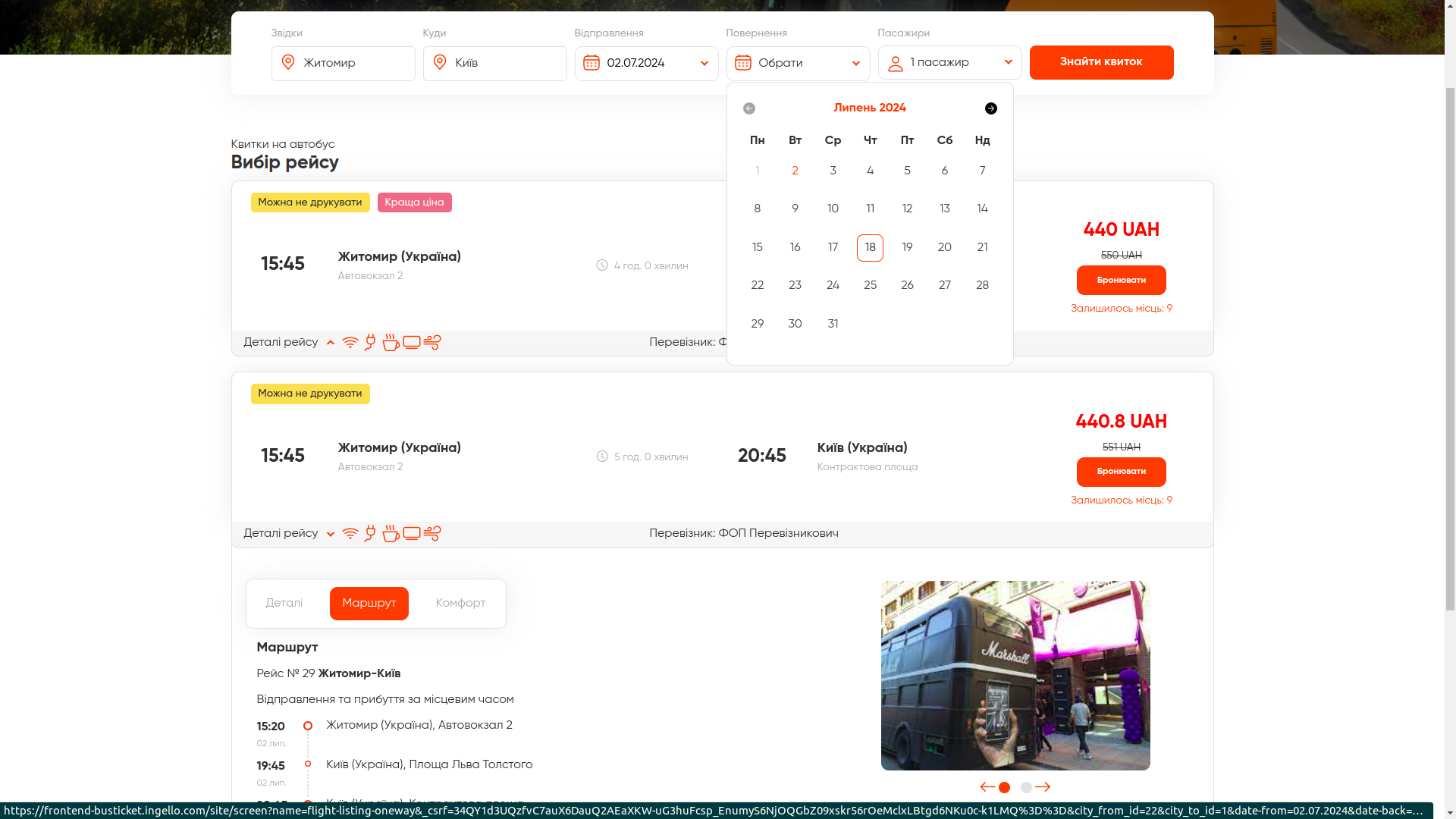
Page with the list of trips after search (these pages were designed and developed as landing pages, thus we automate content generation for promoting the company through search engine tools - Google SEO).
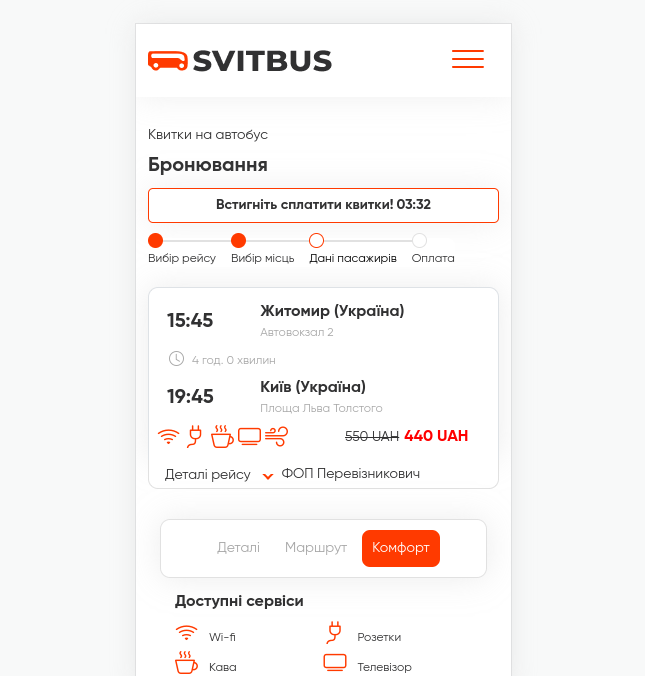
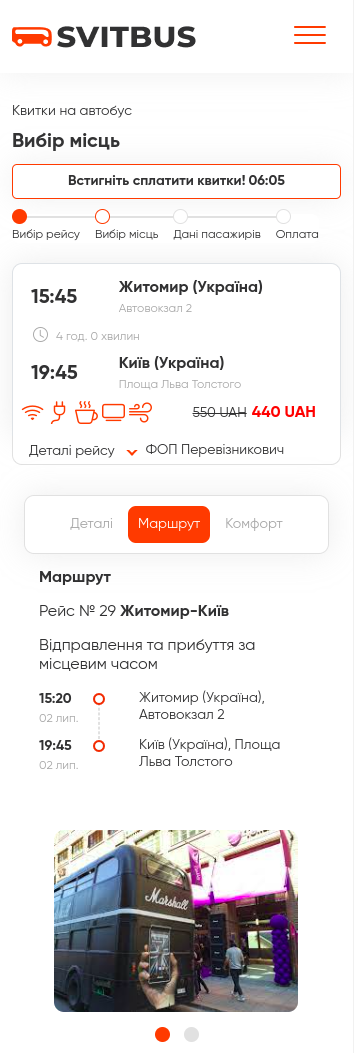
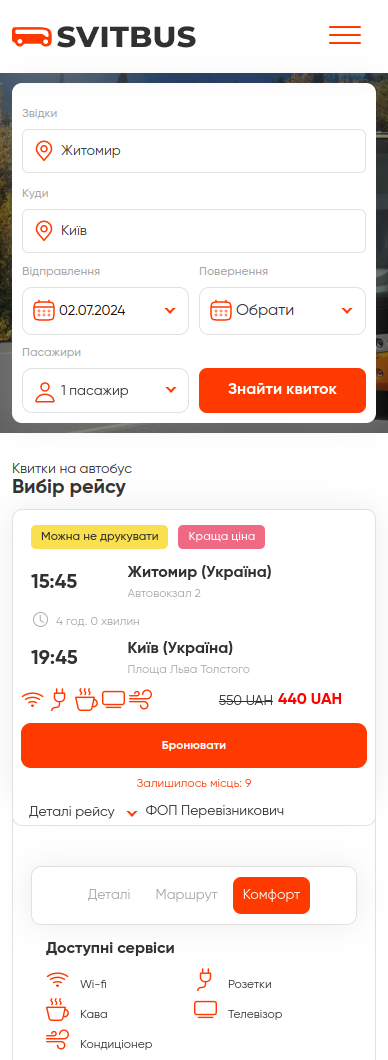
The website also has an adaptive mobile version that is convenient for smartphones and tablets. The mobile version has its own unique design and unique block layout, as well as a drop-down menu.
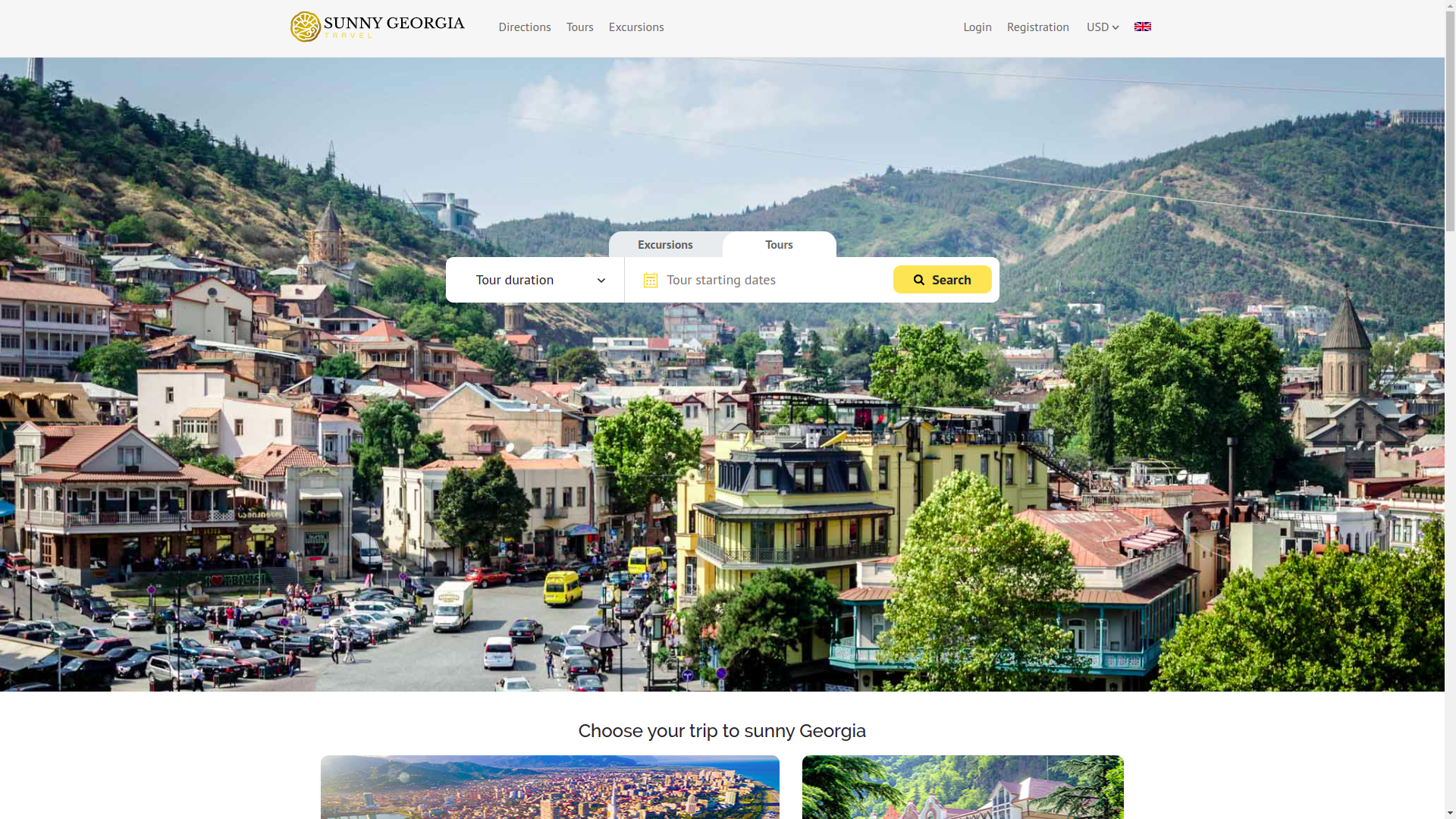
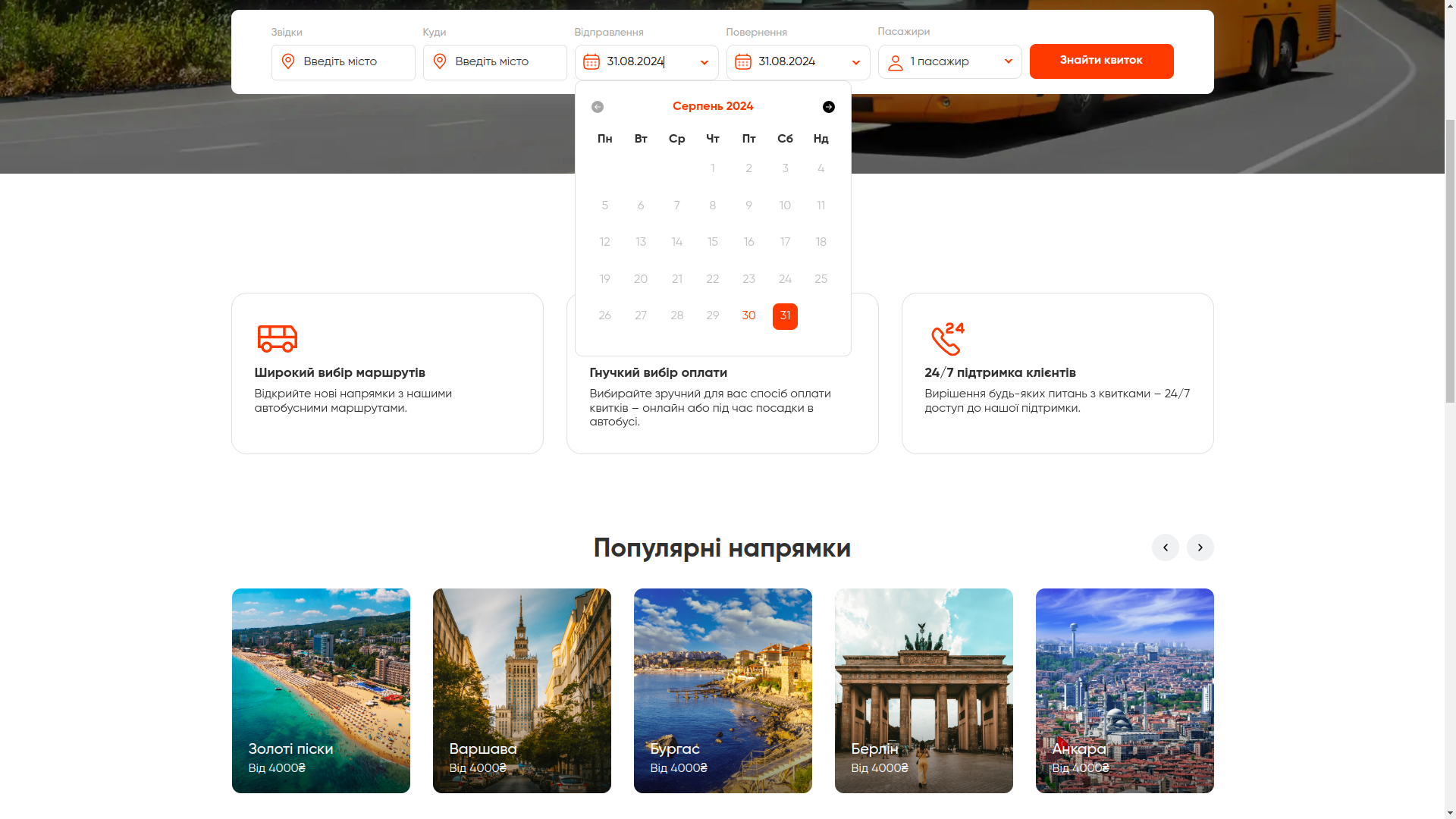
On the main page you can choose destinations using smart search - it works with suggestions and also in several languages at once.
You can choose the departure date (optionally you can choose the return date, so the search will be in two stages - there and back); dates in the past are not available.
You can choose the number of passengers, then the search will be performed only for those trips where there are enough available seats, and tickets will be generated for each passenger + the cost will be calculated.
You can also choose one of the popular destinations. Popular destinations are generated automatically in the system; landing pages are also generated, which improves coverage in search engines.
(Some blocks were added to the design after our development, so we do not comment on them).

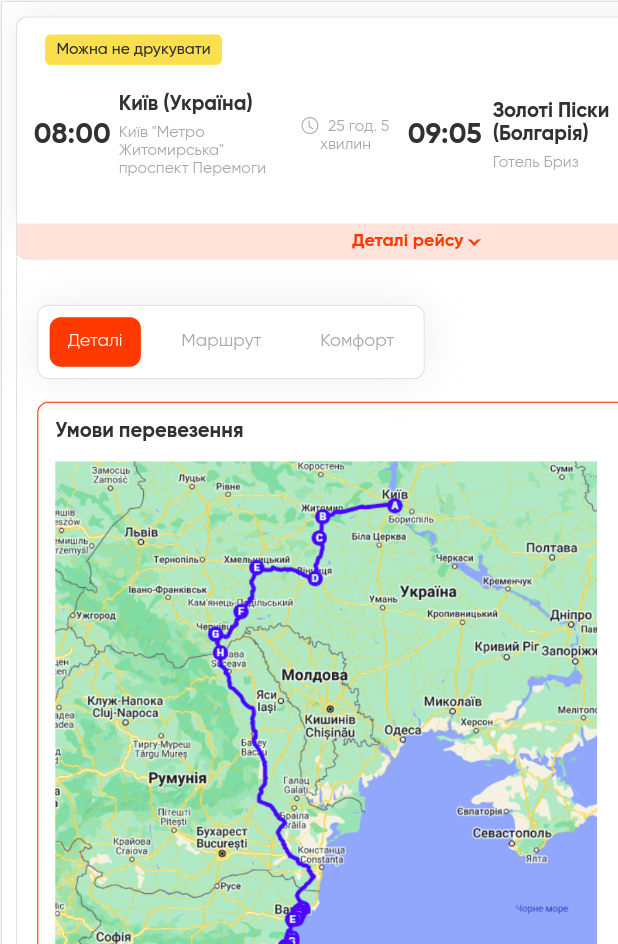
When choosing a trip, you can view many details that will help you decide on the price and comfort level, as well as route details, intermediate points, and other data.
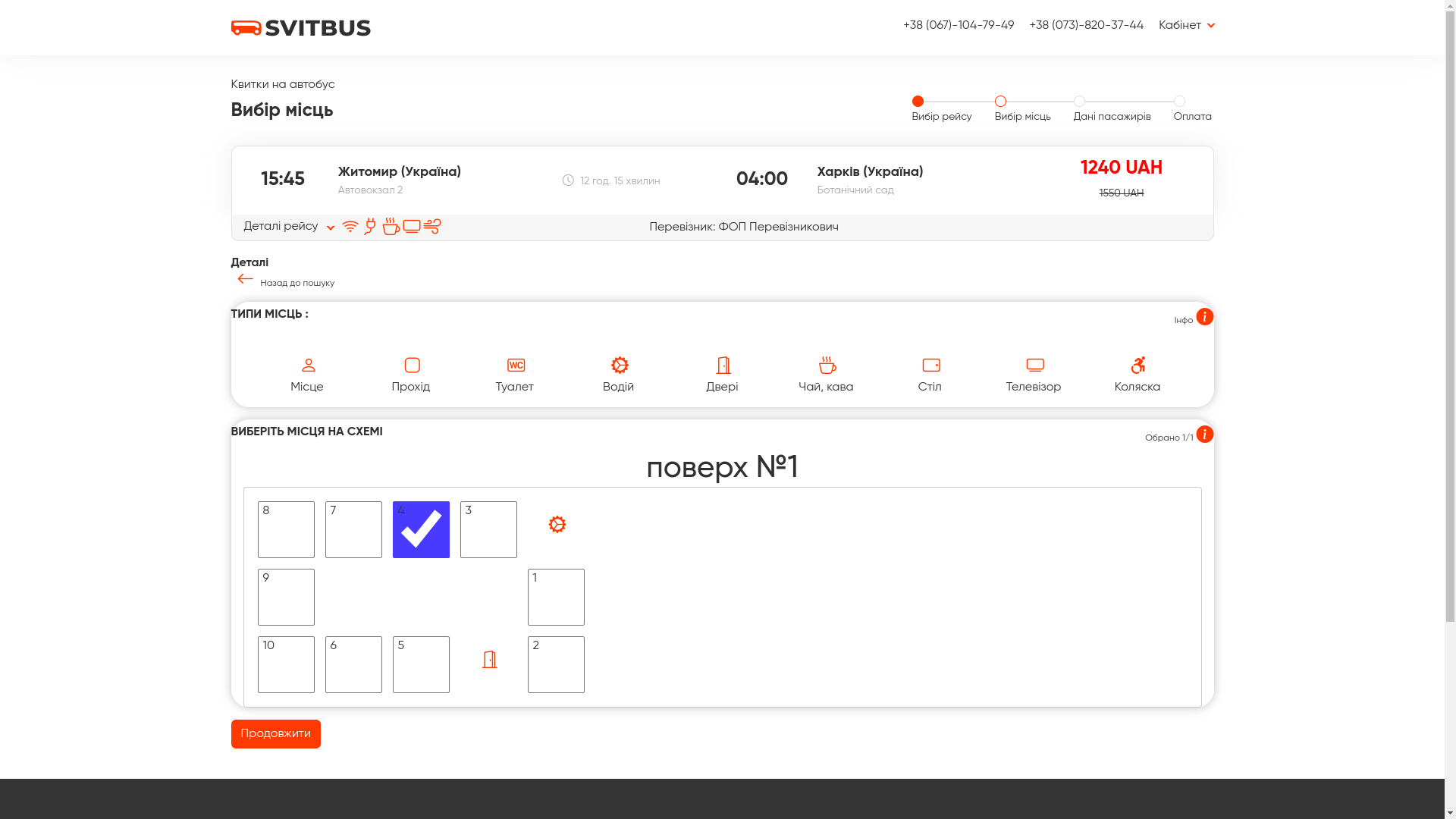
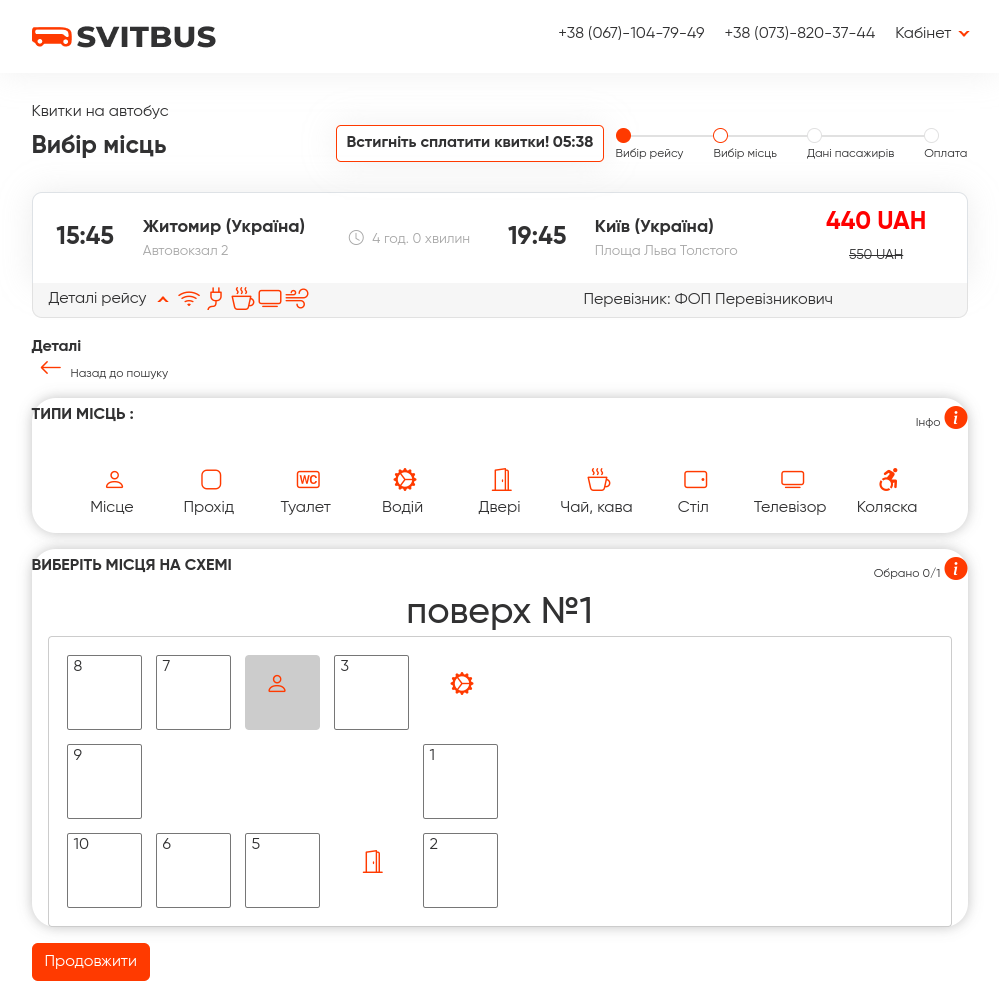
When you have chosen a specific trip, you can see the geometry of the bus. Buses are different, and therefore in the administrative area the site owners can use a special bus builder, where they can create their own unique buses and add the seating layout, bus dimensions (seats and floors), locations of exits, toilet, buffet, and other amenities.
The passenger is allowed to choose a seat and can properly imagine exactly where they will sit, how convenient it is for them, and they can also place the passengers they are traveling with.
There are buses with open seating. The passenger will be warned about this.
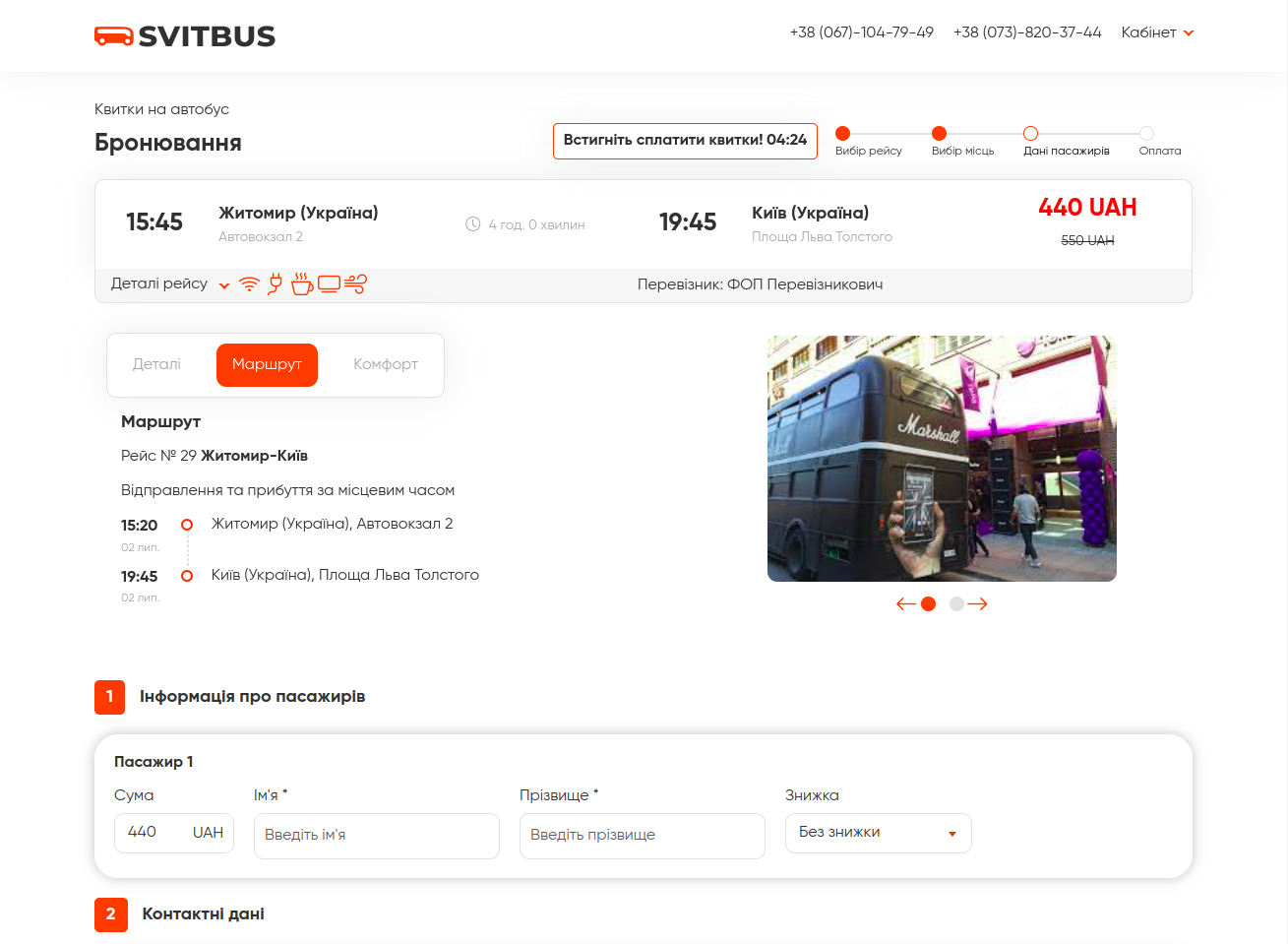
In the upper right corner you can see the booking stages from trip selection to payment, which is clear for the client. This division into pages also allows convenient conversion counters to be implemented for the carrier company, which will make it possible to analyze and improve conversion.
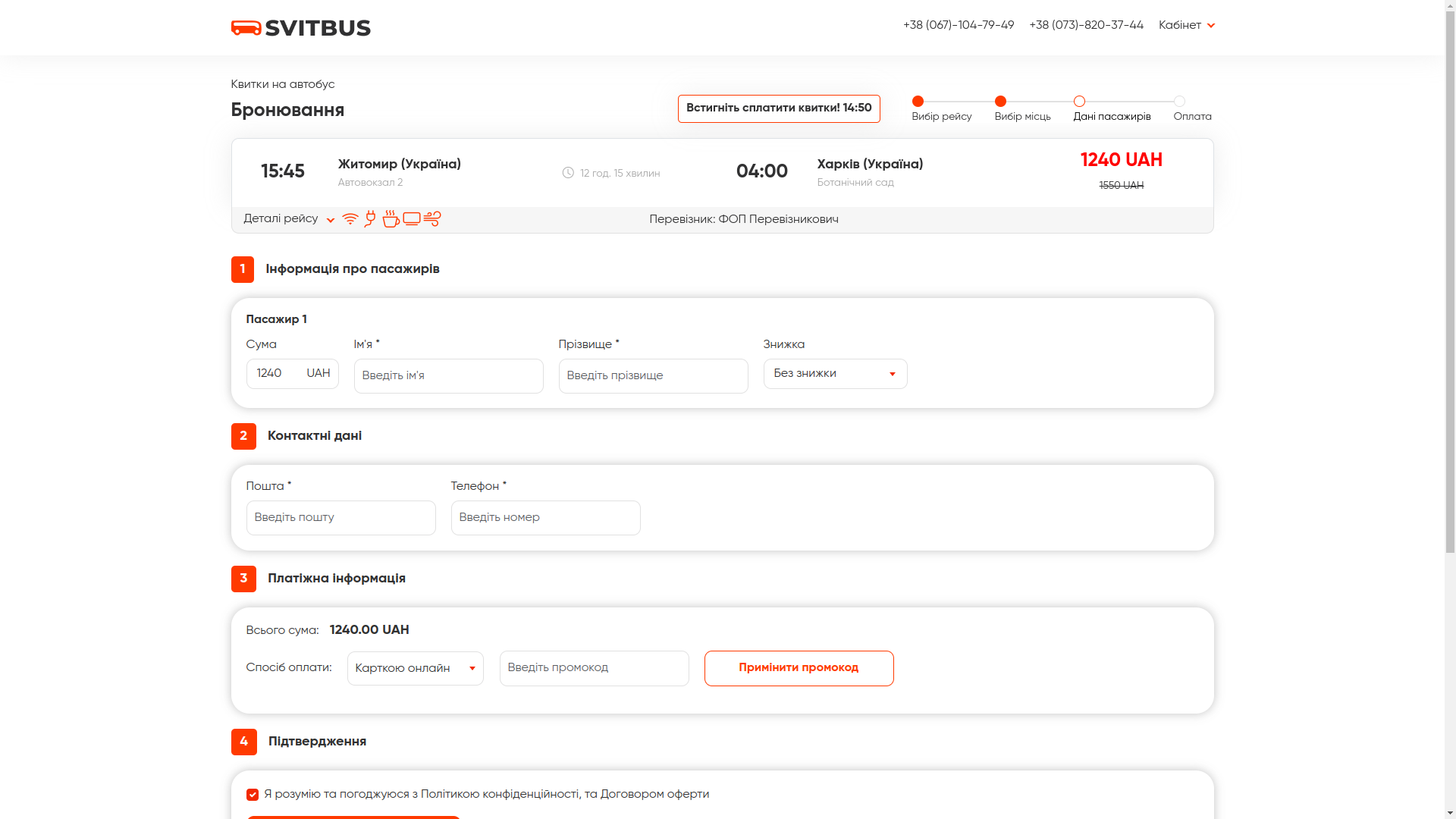
At the booking stage, we can finally review the details of the currently selected trip and enter passenger data.
One of the complex elements of this screen is the discount calculation algorithms; they take into account many parameters - personal discounts for the client, discounts for certain client categories for a specific seat, discounts by promo code. As discussed earlier, these are very complex and ambiguous algorithms; the profitability of the company depends on the sequence of calculation phases. And discounts themselves are the most important sales stimulator, so this is one of the most important parts of the system.
In earlier versions, the system had a function for confirming the reality of the phone number, which filtered out various bots and automated scripts. In future versions it was decided to temporarily disable this function (in the future it makes sense to return it, although it does affect conversion).
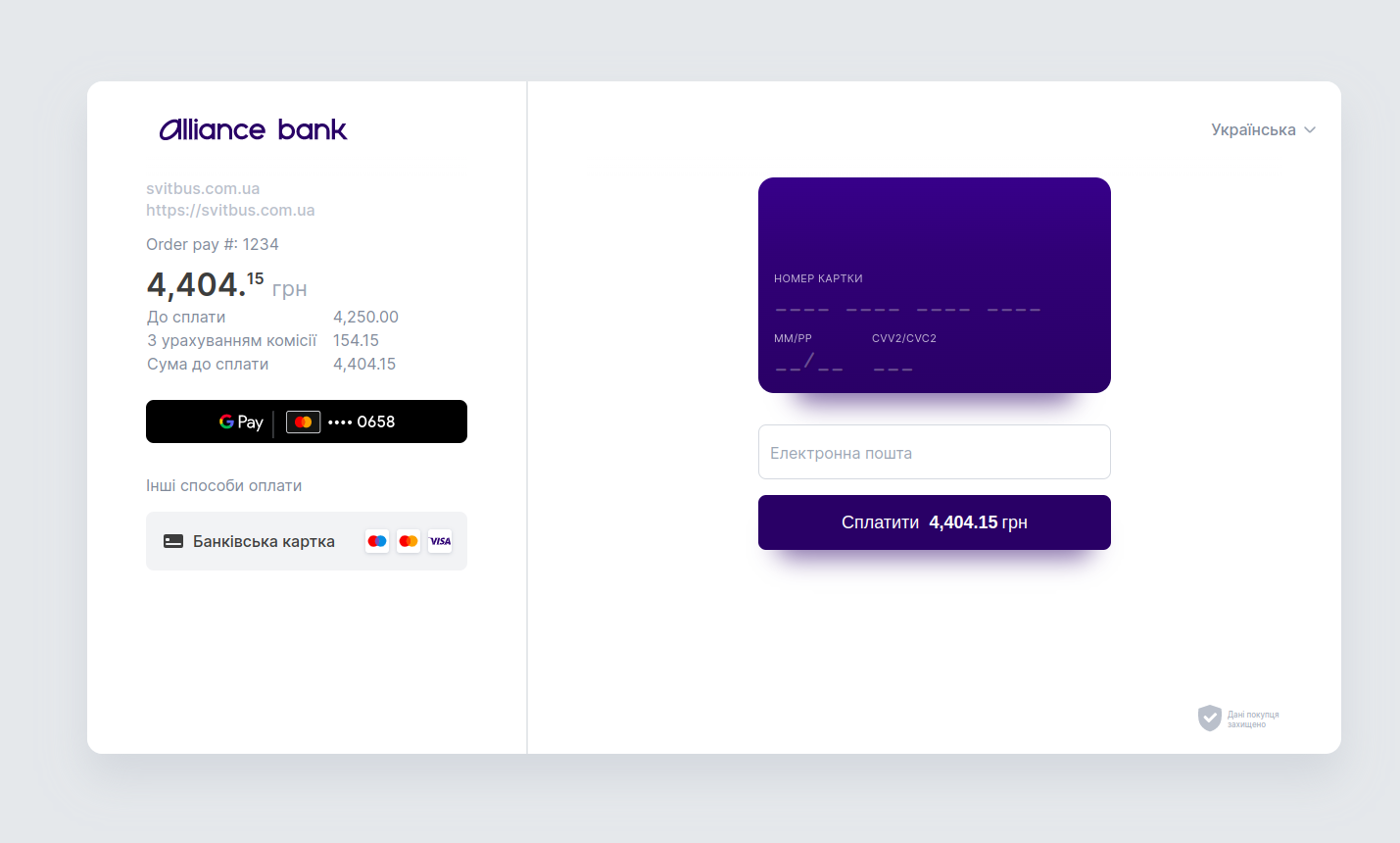
Next, the client is offered to make payment. Initially, we integrated with the Fondy system. This was a difficult and protracted stage, because any system sets its own requirements and often gives refusals. However, we were able to pass the checks. Now the service uses payment through Alliance Bank; technically the payment process is no different, only the provider differs.
The payment system does not simply transfer funds to the company's accounts. It automatically confirms the booking.
After selecting a seat, the service starts a timer that gives 15 minutes for a temporary seat reservation. During this time, another client will not be able to book the seat. However, if during this time the client does not manage to pay for the tickets, the temporary booking must be removed and the seat will become available again and will be taken into account in trip search.
After a successful payment has gone through (it can also be unsuccessful, by the way), the system assigns a permanent booking to the selected passenger seats.
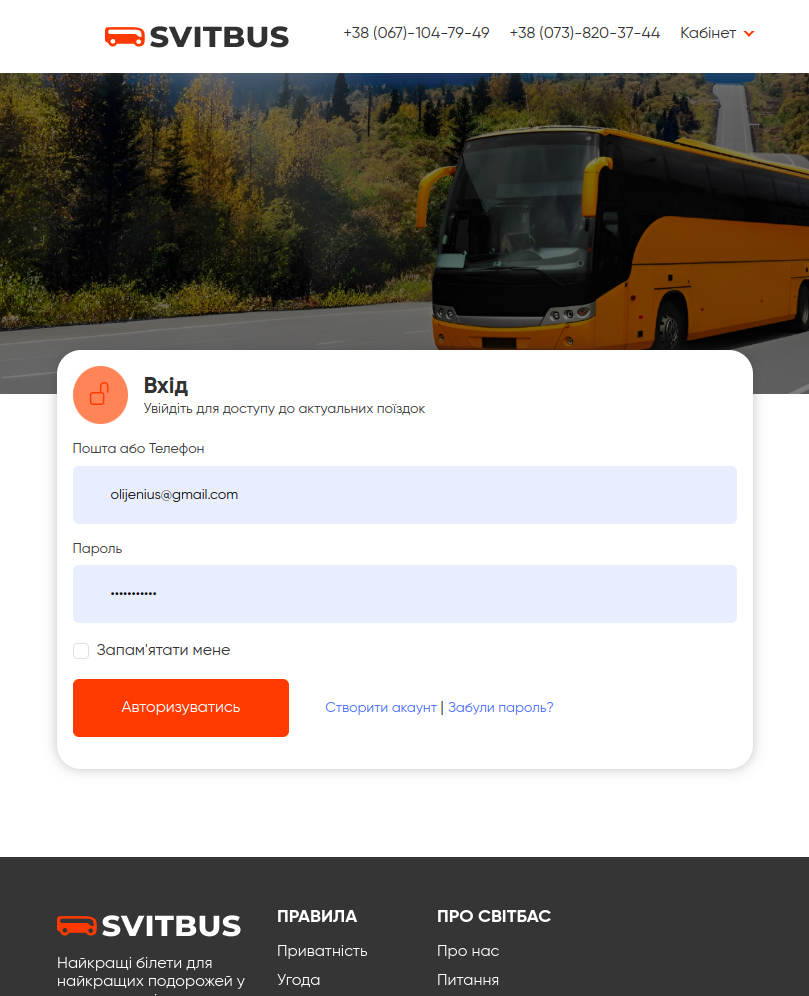
Clients have access to a personal account by phone and password. Usually on similar services we also implement registration through Google or Facebook, which is very convenient and modern; this project does not have this function, but you can see it in our other projects.
Registration and authentication are standardized - with the ability to verify the phone, remember the user, and recover the password via email.
In the personal account, the client sees new and old trips and can download tickets.
Technologies
This project used a combination of both innovative and stable, standard technologies for this type of project. For each solution, we select technologies individually; depending on the specific tasks, the technologies can differ greatly, because every technology has not only advantages but also significant drawbacks. The task of our architect is to select technologies in such a way that the advantages work for you, and the disadvantages do not become a problem. The main task when building the architecture is to squeeze the maximum out of the allocated budget, to make sure that the cost of further support does not become many times more expensive than the cost of the development itself (which happens extremely often with incorrectly designed architecture and violation of standards).
SFL - Structural Fractal Language - automates prototyping of databases, APIs, and documentation.
PHP - The main and most popular language for web development.
JavaScript - The main and most popular language for programming browser components.
HTML - A markup language for the structure of web applications and websites.
CSS - A cascading style sheet language for creating the appearance of web pages.
Linux - The most reliable OS for servers and business applications in the web context.
BASH - A scripting language for automating system and infrastructure tasks.
Docker - A platform for containerization, process isolation, and application deployment.
Docker-Compose - A tool for simplified container orchestration in a multi-container application.
Fast CGI PM - A process manager that optimizes and allows processing more requests simultaneously, thereby simplifying scaling.
MySQL - The most popular SQL relational database management system.
Nginx - A high-performance web server and proxy, the most popular in the world.
Fractal - A framework developed by ingello for automating application development processes and optimizing project budgets.
Yii2 components - Components of the highest-performance PHP framework.
Symfony components - Reusable components of the most structured PHP framework.
We can do much better
What if I told you that we can create a project many times better - with the implementation of artificial intelligence services in ticket search and the recommendation system, with more advanced automation of business processes, with smart internal analytics, with dashboards and control panels for employees and the owner, with regulatory components integrated directly with the management system, and much, much, much more! You can become the owner of THE coolest project in this field, a technological monopolist whom the entire next generation in the transportation sector will worship.
Is this about you? Using the link below, you can go to our website and start communicating with us. Let's begin planning the project!
Advanced features that we want to develop for you:
- AI integration for route optimization:
- Automatic creation of the most efficient routes, taking into account traffic jams, weather, and road congestion in real time.
- Personalized recommendations for clients:
- Using machine learning to predict client preferences (for example, favorite places, preferred routes) and offer personalized discounts or services.
- Dynamic pricing based on demand:
- Adjusting ticket prices depending on demand and seat availability on trips (similar to airlines).
- Contactless passenger identification:
- Implementing facial recognition technology for automatic registration and identification of passengers at stops and boarding points, which speeds up the process and reduces the likelihood of errors.
- Integration with external platforms (Uber, BlaBlaCar, etc.):
- The ability to book additional transport services directly through the application so that the client can reach the final destination even after the bus trip.
- Reports based on Big Data:
- Advanced analytics based on big data to identify key trends in passenger flow, client preferences, and route profitability.
- Predictive bus maintenance:
- Using the Internet of Things (IoT) to monitor bus condition and predict breakdowns, which helps minimize downtime.
- Support for multi-module payments:
- Connecting cryptocurrencies, digital wallets, and international payment systems to ensure payment convenience and security.
- VR overview or panoramic bus overview before purchasing a ticket:
- The ability for clients to inspect the bus and choose seats using virtual reality before purchasing a ticket.
- Gamification to increase loyalty:
- Implementing a reward system for using the service, such as "bonus miles" or cashback for frequent trips.
- A real map with real-time monitoring:
- A map visualizing all moving buses of the company in real time, so passengers can track their transport and know the exact arrival time.
- Automatic review and reputation management:
- Built-in algorithms that automatically process client reviews and publish positive reviews on the website, as well as help solve emerging problems.
- Integration with voice assistants:
- Support for voice commands through assistants such as Siri, Google Assistant, or Alexa for booking tickets and receiving information about trips.
- Real-time trip demand management:
- A system that evaluates trip occupancy and automatically suggests increasing the number of available buses on in-demand routes.
- Integration with social networks for simplified registration and login:
- The ability to log in and register through social networks with additional offers based on user activity.
Why you need to order right now
We do no more than 5 projects a year, our resources are limited because we fight for project quality, not quantity. In the coming month, we plan to load the team with work. The sooner you contact us, the better. We will not talk about inflationary processes and competitor activity - you understand everything here yourself.
What is the difference
How is this better than ready-made software
Ready-made services are programs that your company will have to adapt to. We offer individual automation services specifically for your unique business processes.
How we differ from competitors
We are cheaper and faster because we have groundwork and experience in implementing software for booking bus tickets. We create a unique product for you based on our experience and groundwork in booking and accounting algorithms.
How your own application is better than a simple website
A website is just a way to advertise to the client. Having only a website, you are forced to do a lot of manual work, which blocks opportunities to scale, increase profit, and reach