What an HRM system solves
While hiring runs through email and messengers, strong candidates slip away, promised calls are forgotten and every new vacancy starts from scratch. Recruitment works like sales: it has a pipeline, conversion, cost and losses. An HRM system makes that process visible and manageable.
- every application lands in one place, whatever its source;
- management sees where each vacancy is stuck;
- strong candidates you did not hire today stay in the talent pool;
- staff are only given shifts and work they are qualified for.
Typical modules
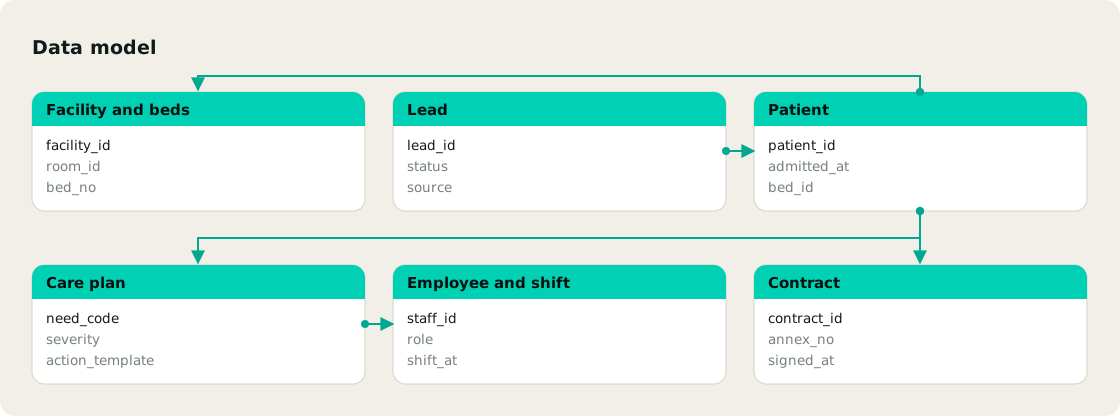
Vacancies and projects, a candidate pipeline, a hiring card with contact history, interview scripts, candidate email templates, employee profiles with roles and access, qualifications, shift rotas and workload, and recruitment reports. The routine is automated: collecting, sorting, reminders and statuses. Hiring decisions stay with people.
How Ingello designs and delivers HRM
- Consultation and modelling. We review how hiring and staff records work today, then define requirements and a model of the system.
- Technical specification. Hiring stages, roles and permissions, data model, integrations and a budget estimate.
- Prototype. Clickable screens where recruiters and managers walk through their own scenarios.
- Development. Interfaces, logic, notifications, integrations, deployment and testing.
Each stage has a fixed price, and you can stop after any of them. Stages and prices are set out in the app development stages and costs series.
Related case studies
- HRM in Forma: vacancies are linked to projects, each candidate has a hiring card with contact history, and interviews follow scripts, just like sales calls.
- Systematising recruitment: why hiring is selling in reverse, how a talent pool saves money on every new vacancy, and where automation does harm.
- Medical centre network: qualifications, shift rotas and workload: the system will not schedule a procedure for someone who is not qualified to perform it.
- FORMA: how HRM shares one ERP platform and one database with sales, the warehouse and projects.